
Table of Contents
ToggleWhat Should You Do When Your Car Breaks Down?
When your car breaks down with warranty coverage, your first priority should be safety. Once you and your passengers are in a safe location, follow the procedures outlined in your manufacturer’s warranty, extended warranty, or vehicle service contract.
Having warranty coverage does not necessarily mean you can take the vehicle to any repair shop and automatically have the repair paid for.
Depending on the agreement, you may need to:
- Contact roadside assistance
- Notify the warranty provider
- Use an authorized repair facility
- Obtain prior authorization
- Pay a deductible
- Provide maintenance records
- Follow specific claim procedures
The Federal Trade Commission advises consumers to review their auto service contract to understand where repairs can be performed, whether pre-approval is required, what towing or rental expenses may be covered, and how claims and reimbursement work.
Knowing these steps before an emergency happens can make a stressful breakdown much easier to manage.
Step 1: Get Yourself and Your Passengers to Safety
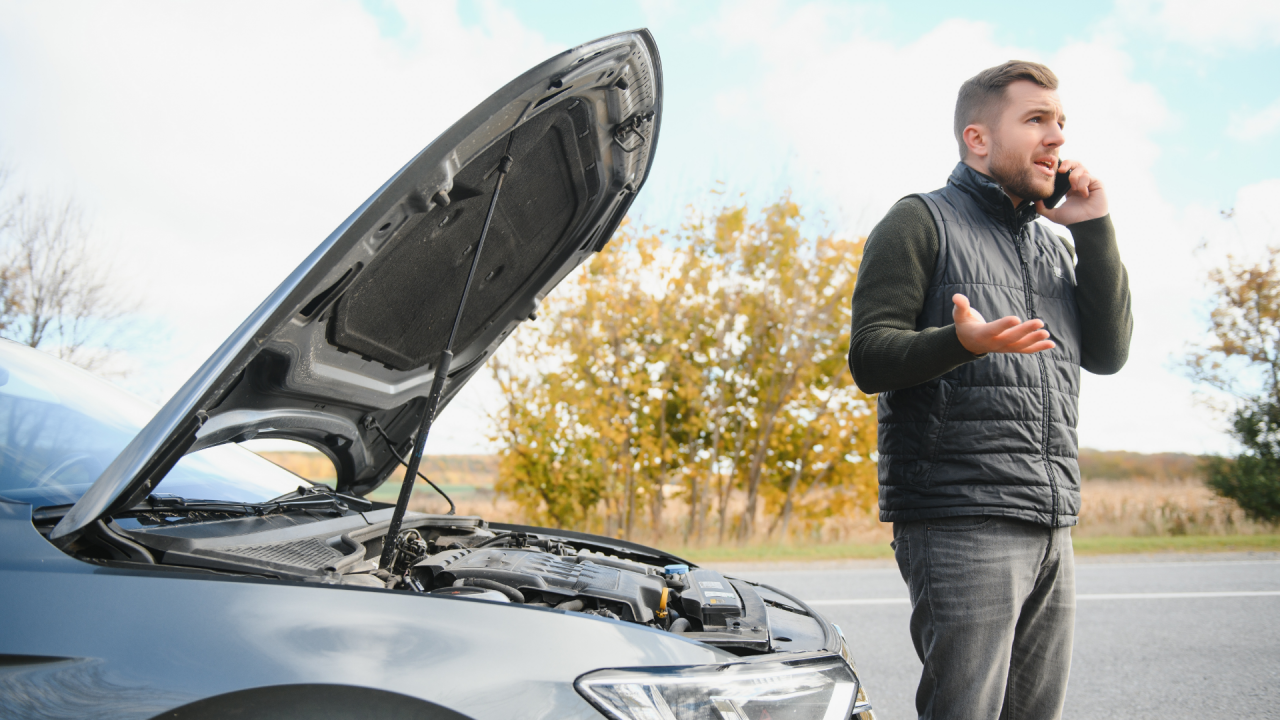
If your vehicle stops working while you’re driving, safety comes before the warranty claim.
If possible:
- Move the vehicle away from traffic.
- Turn on your hazard lights.
- Pull onto the shoulder or another safe location.
- Keep passengers away from moving traffic.
- Call emergency services if there is an immediate danger or an accident.
- Do not attempt repairs in an unsafe location.
If the vehicle is smoking, overheating, leaking fuel, or showing signs of a serious mechanical problem, avoid attempting to drive it further.
Do not risk additional damage or personal injury simply to get the vehicle to a repair facility.
Step 2: Check Your Warranty or Vehicle Service Contract
Once you’re safe, locate your warranty documents.
This is important because an extended warranty or vehicle service contract does not necessarily cover every type of breakdown.
An extended service contract may cover specific repairs or components, while excluding normal wear and tear, accident-related damage, routine maintenance, or other conditions.
Look for information about:
- Covered components
- Exclusions
- Deductible
- Roadside assistance
- Towing benefits
- Rental vehicle benefits
- Authorized repair facilities
- Prior authorization
- Claim procedures
- Coverage limits
- Contract administrator
If you have a digital copy, keep it accessible on your phone.
Step 3: Contact Roadside Assistance
If your contract includes roadside assistance, contact the appropriate provider.
Depending on your coverage, roadside assistance may include services such as:
- Towing
- Jump-start assistance
- Flat-tire assistance
- Lockout service
- Fuel delivery
- Emergency roadside support
However, don’t assume that every roadside expense is automatically covered by your warranty.
The FTC specifically recommends checking whether an auto service contract covers towing and rental vehicle expenses because coverage can have limits.
Important:
Before arranging an expensive tow independently, check your contract if the situation allows.
You may need to use a specific provider or obtain authorization before certain expenses are reimbursed.
Step 4: Contact Your Warranty Provider Before Authorizing Repairs
This is one of the most important steps when your car breaks down with warranty coverage.
Don’t automatically authorize a major repair simply because your vehicle has an extended warranty.
Call the warranty administrator or provider and explain:
- Your vehicle’s current location
- The problem you’re experiencing
- Your vehicle identification number (VIN)
- The mileage
- Where the vehicle will be inspected
- The name of the repair facility
Ask whether the repair requires prior authorization.
Some auto service contracts require approval before repair work or towing services are performed.
Why prior authorization matters
If you authorize expensive work without following the contract’s required procedure, you could create a dispute over whether the provider is responsible for the bill.
Always follow the written claim procedure whenever possible.
Step 5: Take Your Vehicle to an Authorized Repair Facility
Your warranty contract may specify where covered repairs can be performed.
Some service contracts provide a network of approved repair facilities, while others may impose specific requirements on where you can take the vehicle.
Before the vehicle is towed, ask:
“Is this repair facility authorized under my warranty or vehicle service contract?”
Also ask whether the facility can communicate directly with the warranty administrator.
This can make the claim process easier because the repair shop may be able to provide:
- Diagnostic information
- Repair estimates
- Parts information
- Labor estimates
- Maintenance records
- Claim documentation
Step 6: Get a Diagnosis and Repair Estimate
Once the vehicle reaches the repair facility, a technician should diagnose the problem.
Ask for a written estimate that identifies:
- Failed component
- Cause of failure
- Required repairs
- Parts costs
- Labor costs
- Diagnostic charges
- Applicable taxes or fees
- Estimated completion time
Do not assume every item on the repair estimate will be covered.
The warranty provider may determine that some components are covered while others are excluded.
For example, a contract may cover a particular mechanical component but exclude related parts or damage caused by another condition.
Step 7: Wait for Claim Authorization
After diagnosis, the repair facility may submit the claim to the warranty administrator.
The administrator may review:
- The contract
- Vehicle mileage
- Vehicle history
- Diagnostic findings
- Maintenance records
- Repair estimate
- Covered and excluded components
The provider may approve the entire repair, approve only certain portions, request additional information, or deny the claim.
The FTC recommends understanding how the claim process works, including how covered repairs are authorized and how reimbursement is handled.
Don’t confuse diagnosis with approval
A mechanic saying:
“Your warranty should cover this.”
is not necessarily the same as the warranty administrator officially approving the claim.
Wait for confirmation before proceeding with major repairs when the contract requires authorization.
What Happens If Your Warranty Claim Is Denied?
A denied claim can be frustrating, but don’t immediately assume you have no options.
Start by asking for the reason for the denial.
Review the Contract
Find the section that the warranty provider used to deny the claim.
Determine whether the issue is:
- An exclusion
- A maintenance requirement
- A waiting period
- A mileage limitation
- A pre-existing condition
- Unauthorized repairs
- A non-covered component
- Lack of required documentation
Ask for the Denial in Writing
A written explanation gives you something concrete to compare against the contract.
Provide Supporting Documentation
Gather:
- Warranty contract
- Repair estimate
- Diagnostic report
- Maintenance records
- Service receipts
- Previous repair invoices
- Communication with the provider
Follow the Dispute Process
Your contract may explain how to request reconsideration or resolve a disagreement about coverage.
The FTC advises consumers with service-contract disputes to deal with the contract administrator and, if the issue remains unresolved, consider contacting appropriate consumer-protection authorities.
For significant disputes, professional legal advice may also be appropriate depending on your circumstances and jurisdiction.
What Costs May Still Be Your Responsibility?
Having warranty coverage doesn’t necessarily mean your repair bill will be $0.
You may still have responsibility for certain costs depending on the contract.
Deductible
Many service contracts require a deductible when a covered repair is performed.
Non-Covered Components
If the repair involves parts that aren’t covered, you may have to pay those costs.
Maintenance
Routine maintenance such as oil changes and tire replacement is generally separate from extended warranty coverage.
Additional Labor
Some contracts may limit the labor rate they will pay.
Upgraded Parts
If you request parts or services beyond what the contract requires, the additional cost may be yours.
Towing or Rental Expenses
These benefits may have specific limits or conditions.
Always ask the warranty provider and repair facility to explain which costs are approved before authorizing additional work.
Documents You Should Keep
Good documentation can make a warranty claim easier to manage.
Keep copies of:
Warranty Documents
Save the complete contract rather than only the sales summary.
Maintenance Records
Keep receipts for oil changes, inspections, and manufacturer-recommended services.
Repair Invoices
Save all invoices, even when repairs aren’t covered.
Diagnostic Reports
Keep written explanations of mechanical or electrical failures.
Claim Numbers
Record every claim or authorization number provided by the warranty administrator.
Communication
Keep emails, letters, and other written communication relating to the claim.
The FTC recommends keeping warranty documentation and related records so you can demonstrate the applicable coverage and purchase information when needed.
Common Mistakes to Avoid After a Breakdown
1. Authorizing Major Repairs Without Checking the Contract
Always determine whether prior approval is required.
2. Assuming Every Repair Is Covered
An extended warranty is not necessarily bumper-to-bumper coverage.
3. Ignoring Maintenance Records
Your contract may contain maintenance requirements, so keep your service documentation.
4. Using an Unauthorized Repair Facility
Check the contract before choosing a repair shop.
5. Assuming Towing Is Automatically Covered
Confirm the towing benefit and any applicable limits.
6. Throwing Away Old Receipts
Previous maintenance and repair records can become important during a claim.
7. Relying Only on Verbal Promises
Get important coverage decisions and approvals in writing whenever possible.
8. Continuing to Drive a Seriously Damaged Vehicle
If continuing to drive could create a safety risk or worsen the damage, arrange appropriate assistance instead.
What If Your Manufacturer’s Warranty Is Still Active?
Before using an extended warranty or service contract, determine whether your vehicle is still covered by its original manufacturer’s warranty.
An extended service contract may overlap with existing coverage. The FTC recommends checking whether the service contract duplicates protection you already have and understanding when the additional coverage begins.
If the manufacturer’s warranty covers the breakdown, you may need to follow the manufacturer’s warranty service procedure instead.
Check:
- Warranty expiration date
- Mileage limit
- Covered component
- Authorized service requirements
- Deductible, if any
- Roadside assistance benefits
Understanding which warranty applies can prevent unnecessary confusion and expenses.
Extended Warranty vs. Manufacturer Warranty
These terms are often used interchangeably, but they are not necessarily the same.
A manufacturer’s warranty generally comes with the vehicle and provides coverage for specified defects or malfunctions during a defined period or mileage.
An extended warranty or vehicle service contract is generally purchased separately and provides the repair or service benefits specified in that additional contract. The FTC notes that service contracts are not warranties in the legal sense and can differ substantially in cost and coverage.
Knowing which type of coverage you have is essential when your vehicle breaks down.
Frequently Asked Questions
Does an extended warranty cover a car breakdown?
It can, but only if the cause of the breakdown involves a component or repair covered by the contract and all applicable conditions are satisfied. Coverage varies by contract.
What should I do first when my car breaks down?
Get yourself and your passengers to a safe location first. Once you’re safe, review your warranty or service contract and contact the appropriate roadside assistance or warranty provider.
Can I choose any mechanic with an extended warranty?
Not always. Some contracts have requirements regarding repair facilities. Check the contract or contact the warranty administrator before authorizing repairs.
Does an extended warranty pay for towing?
Some contracts include towing or roadside assistance, but the benefit may have limits or conditions. Check your specific contract before assuming towing is covered.
Do I need warranty approval before repairing my car?
Some contracts require prior authorization for covered repairs. Because procedures vary, contact the warranty provider before authorizing significant repairs.
What happens if my warranty claim is denied?
Ask for the reason in writing, review the relevant contract language, gather supporting records, and follow the contract’s dispute or reconsideration procedure.
Will my warranty cover the entire repair bill?
Not necessarily. Deductibles, exclusions, coverage limits, labor restrictions, non-covered components, and other contractual conditions may leave you responsible for part of the cost.
Does warranty coverage include routine maintenance?
Extended warranties and vehicle service contracts generally focus on specified repairs rather than routine maintenance. Some contracts may offer additional maintenance benefits, so review the actual agreement.
Can I use my extended warranty after a breakdown away from home?
Potentially. However, your contract may specify authorized repair facilities and claim procedures. Contact the provider before authorizing repairs and confirm what assistance is available in your location.
Get the Right Support When Your Vehicle Needs It Most
A breakdown is stressful enough without having to figure out your warranty coverage at the same time. Knowing what to do can help you avoid unnecessary expenses and prevent mistakes during the claim process.
When your car breaks down with warranty coverage, remember the basic sequence:
Stay safe → Check your coverage → Arrange approved roadside assistance → Contact the warranty provider → Use an authorized repair facility → Get a diagnosis → Obtain claim authorization → Keep your records.
Your warranty is only useful when you understand how to use it. Coverage, exclusions, deductibles, repair-facility requirements, and authorization procedures can all affect the final outcome of a claim.
Protect Your Vehicle With Confidence From Auto Advantage
Auto Advantage helps vehicle owners understand their vehicle protection options and make more informed decisions about extended warranties and vehicle service contracts.
If you’re considering an extended car warranty or want to understand your available vehicle protection options, contact Auto Advantage today.
Don’t wait until a breakdown leaves you stranded. Understand your coverage, know the claim process, and choose vehicle protection that fits your needs.